Role: Game Design • UI • UX
Platform: Android
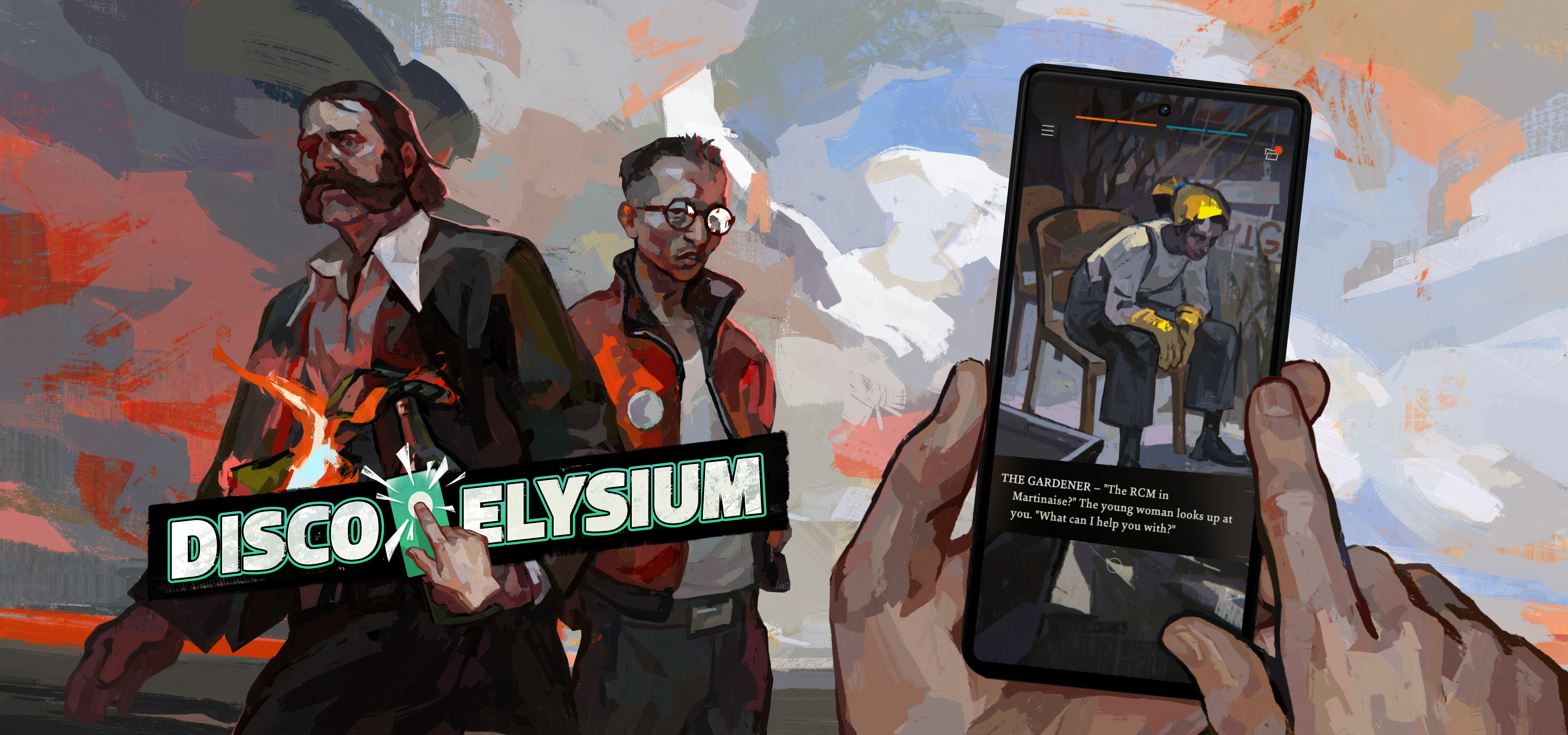
Disco Elysium is a mobile adaptation of the award-winning CRPG of the same name. You play as a detective solving both a murder, and the mystery of your own identity.
As Senior UX Designer at ZA/UM, I was tasked with re-developing Disco Elysium for Android and iOS. In this role, I led the development team all the way from concept to release. I developed game mechanics, art direction, UX flows, wireframes, UI illustrations, animation, storyboards, and UX testing material.
The Design Challenge
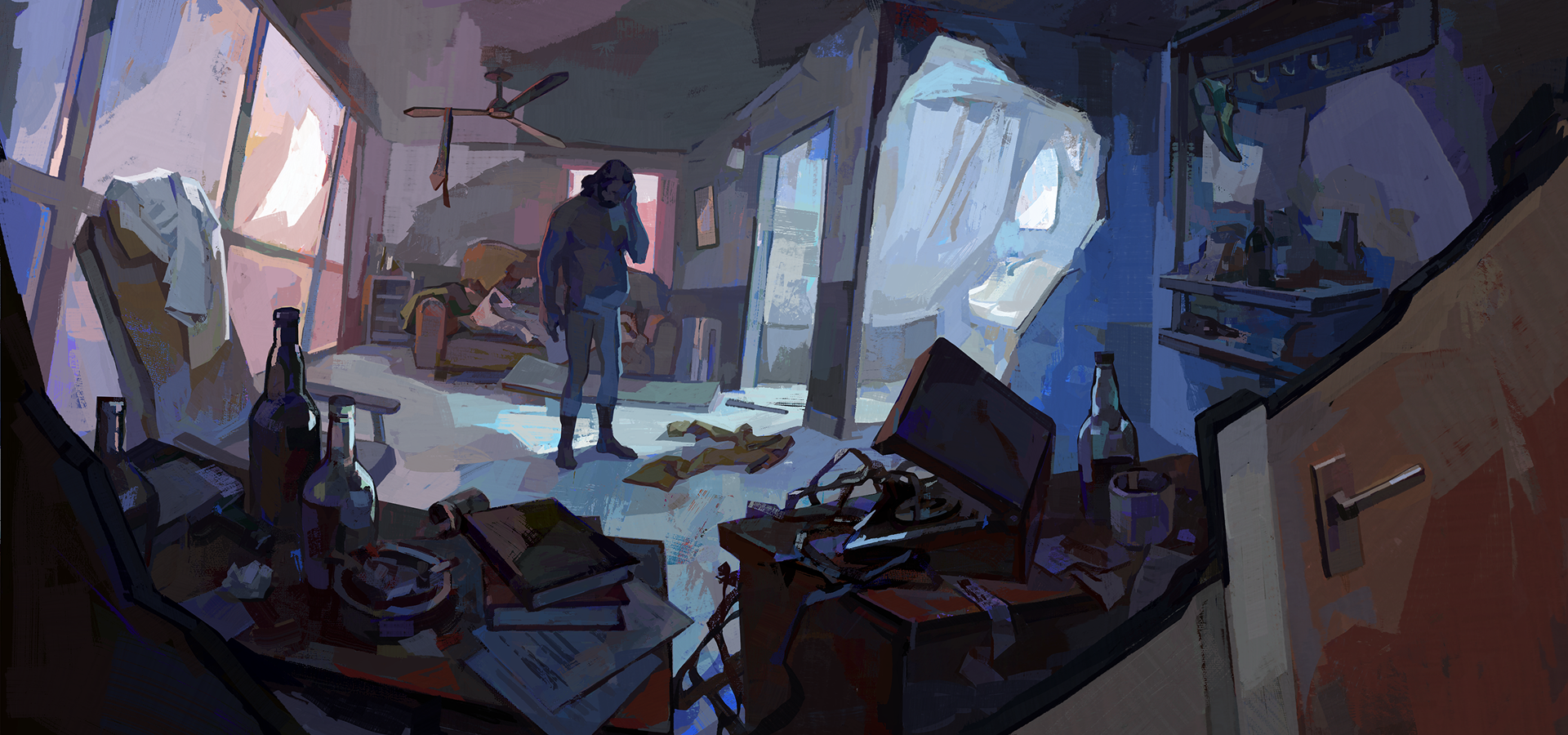
The project began with figuring out the most suitable way to bring Disco Elysium to mobile, enabling those without PCs and consoles to experience the story. Disco Elysium is a massive game; an open world with over 1M words of dialogue, full voice acting and soundtrack. A direct port to mobile would have been impossible, as phones are not as performant enough or contain enough storage to support it. As well as this, the format CRPGs often take are not condusive to the way that people use phones.
The goal became re-developing Disco Elysium from the ground up, using as many existing assets as possible to create a game more suitable for mobile play. In doing so, we could show Disco Elysium to a brand new audience, and give fans a new way to experience it.
Defining the Concept
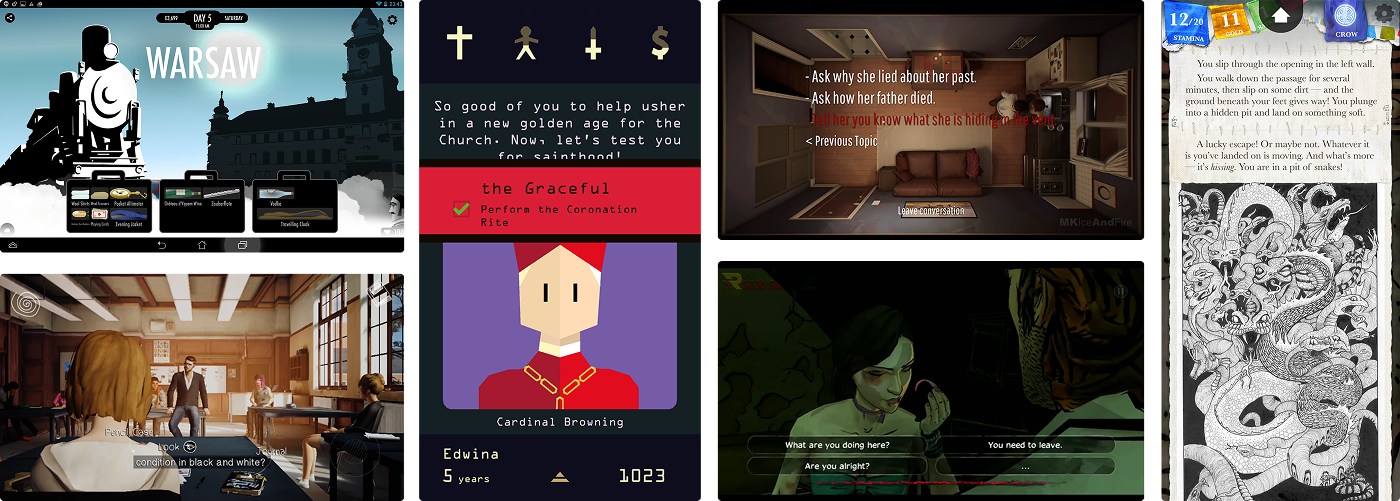
As one of the key goals is to deliver Disco Elysium to a wider audience, I developed new personas for our target player profiles. In identifying player needs, I came to the conclusion that the most suitable format would be something more like an interactive graphic novel than an open world exploration game.
In terms of design changes, it was important to me that we stay true to Disco Elysium’s artistic vision, and keep it free of the kinds of dark patterns you'd expect to find on mobile games. I wanted to change the format as little as possible, and let the art and writing speak for themselves. We would offer the player a premium experience, with a free demo so they understood what were buying.
As for the visuals, I wanted to keep Disco Elysium's painterly aesthetic; expand it out of the portraits and into the world itself. All art would have a consistent fidelity, and match the VFX and UI. Disco Elysium's film tape motif lent itself well to being thematically illustrative of a comic, so I wanted to lean into this aspect.
Redesigning the Format
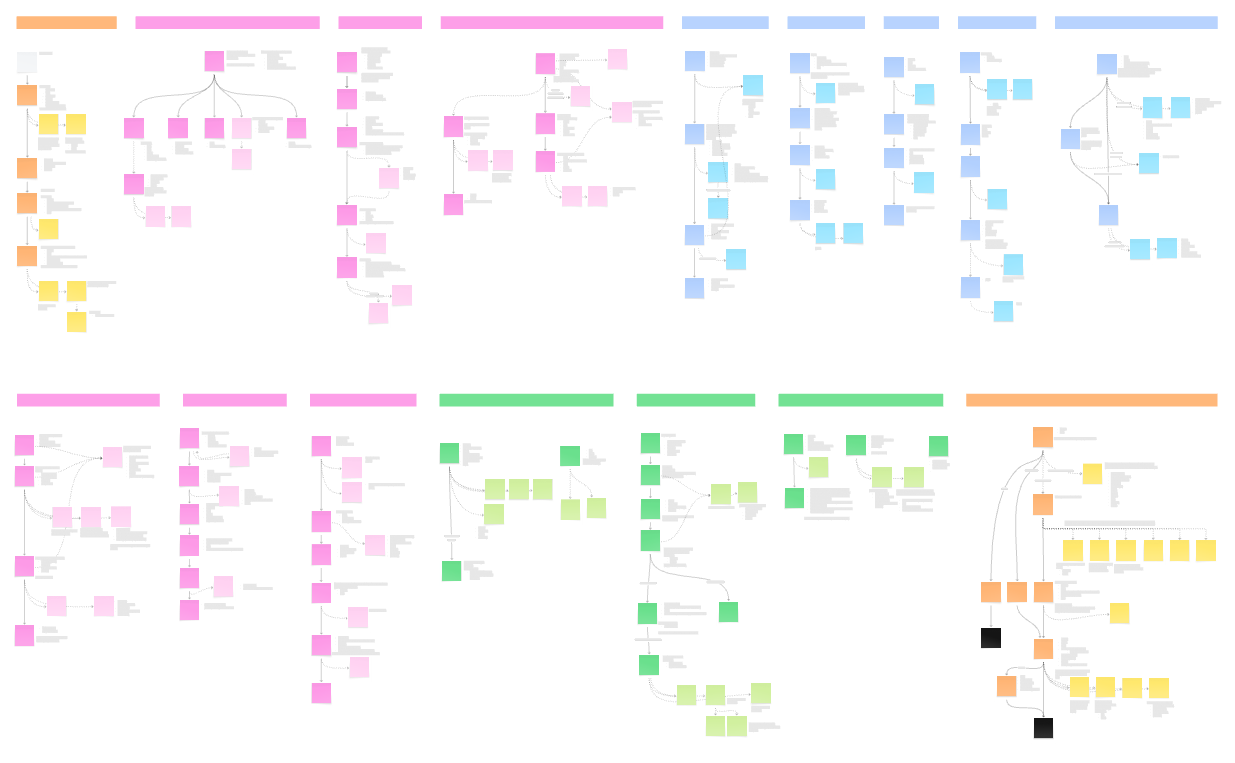
Instead of an open world for the player to travel over while ticking-off tasks, the game would be a collection of chapters and levels to pick from. Each level would contain all the relevant characters and locations to explore, and have the task reframed as a goal. This meant that not only does the player still have the freedom to pursue the most interesting thread, but there are several other benefits too:
- Being able to specify exacty which characters and dialogues are within a level meant that we could reduce narrative disruption, and meant the player always had the information they needed to understand the story.
- Framing levels via their narrative goals makes its clear how to progress. It’s easy for the player to decide what to do next, and easier to pick up after a break in play.
- Splitting the game into a level structure allows us to deliver the game in 10 minute portions, with natural stopping points.
Breaking down all of Disco Elysium into chapters and levels was a massive challenge, and required always keeping in mind how all the narrative events needed to be sequenced.
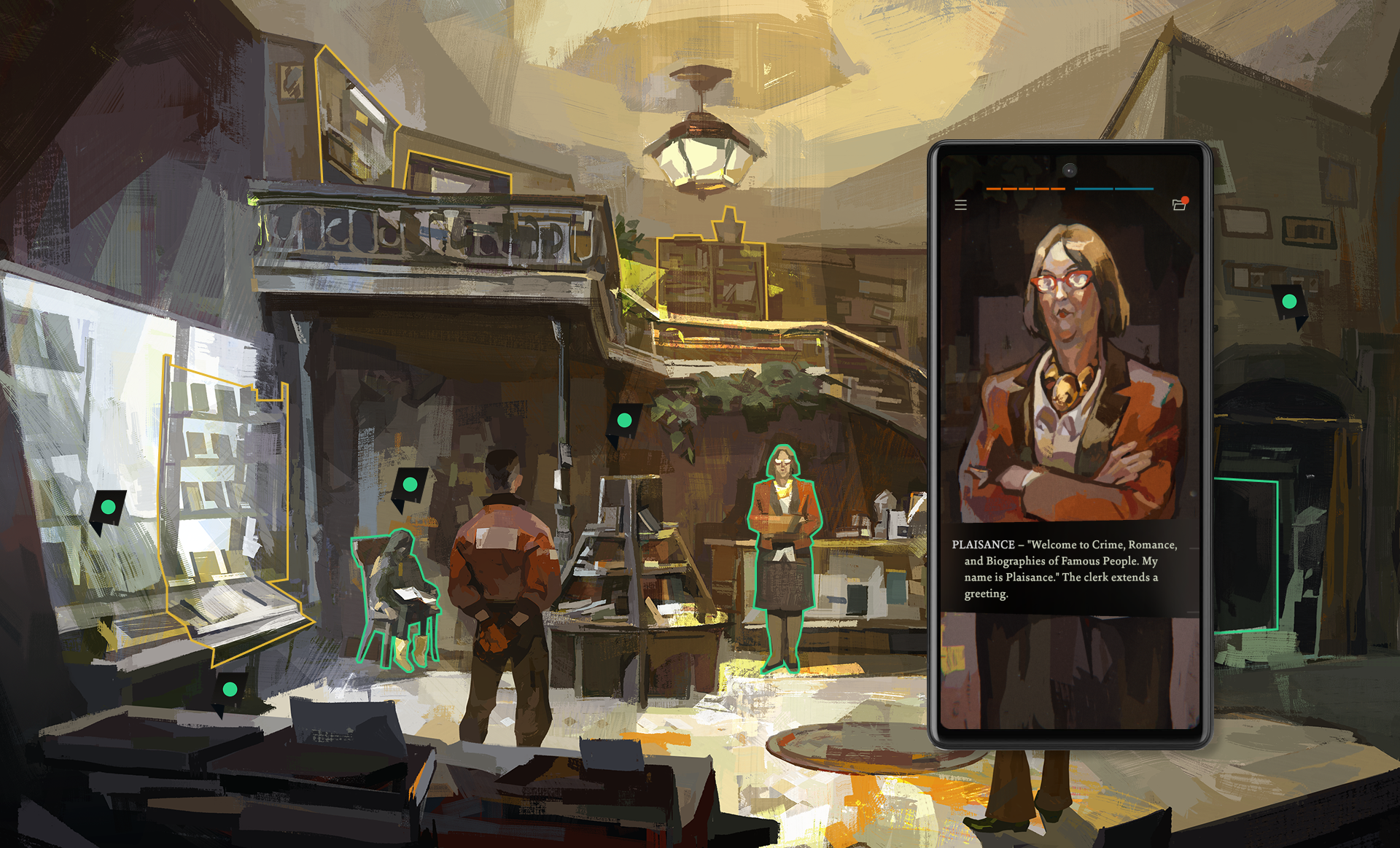
Mobile first interactivity
Instead of using buttons or a mouse to select, the controls would be gesture based. The player would swipe up to select and inspect, and swipe sideways to change option or dismiss. Given the film tape aesthetic, we ensured the UI had a secondary motion and tilt sensitivity to make it feel like a physical medium. This worked really well for selecting dialogue options and trying skill checks, as it simulated the experience of being on a traditional film editing machine; the UI would slide, spin and latch with momentum.
As an extra treat, several “minigames” were developed to make use of a phone as the native controller - utilizing the gyroscope to look around 360 degree photospheres, or drawing on the whole touch screen.